
Obituary for Dr. Michael Diepenbroek
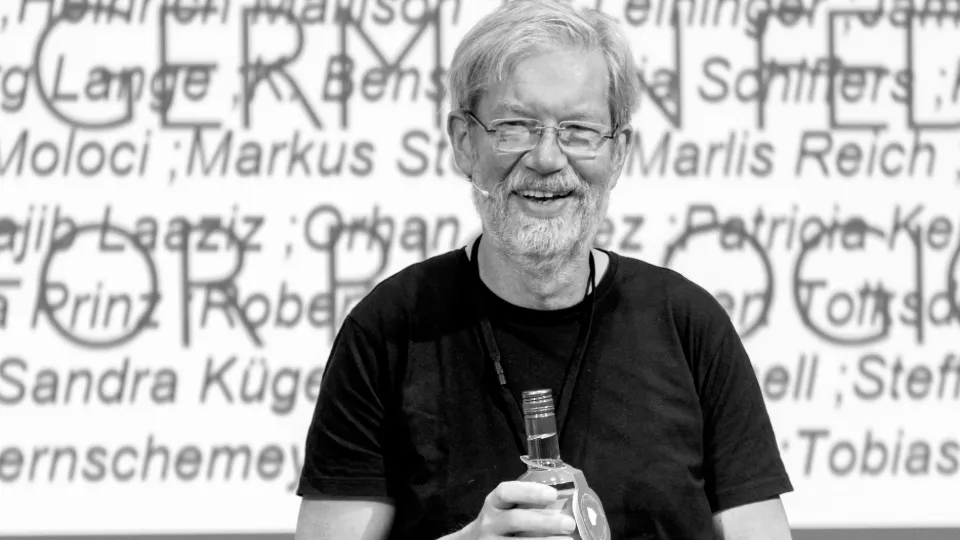
Photo: Patrick Glöckner
A Pioneer of PANGAEA and the International Research Data Infrastructure
Michael Diepenbroek did more than building the PANGAEA information system — he played a decisive role in shaping the idea of a sustainable research data infrastructure. As a geologist and computer scientist, he combined two disciplines that were crucial to his work: the scientific use of data and the development of technical systems that make those data permanently available, findable, and reusable — in accordance with the FAIR data principles. Michael was profoundly open to the world. He drew inspiration from everything around him, embraced ideas wherever he encountered them, and combined them into something entirely new. Many of the ideas that advanced PANGAEA emerged from this openness.
After studying computer science and geology and earning his doctorate in geology at Freie Universität Berlin, Michael Diepenbroek initially worked at the computing center of the Alfred Wegener Institute in Bremerhaven. From 1994 to 1997, he designed and implemented the scientific information system PANGAEA – Data Publisher for Earth and Environmental Science.
In doing so, he laid the foundation for an infrastructure that remains highly significant today, far beyond its original field of application. Under his many years of leadership, PANGAEA developed into an internationally established information system for the Earth and environmental sciences. In 2020, the University of Bremen recognized that, under his leadership, PANGAEA has played a decisive role in advancing the development of research data infrastructures for more than 25 years.
Michael Diepenbroek never regarded research data as merely files to be stored. For him, quality, documentation, context, findability, long-term availability, and reusability — being "fit for use" — were inseparable. Data should not simply be archived; they should become part of the long-term creation of knowledge.
This conviction shaped his international work. As Managing Director of the World Data Center for Marine Environmental Sciences (WDC-MARE), he championed international collaboration and standardization in research data management. From 2009 onward, he also served as Vice Chair of the Scientific Committee of the ICSU World Data System.
Michael Diepenbroek belonged to a generation of scientists who recognized the future importance of research data at a time when terms such as Open Science, FAIR Data, and Research Data Management had not yet become established or even defined concepts in science policy. Many of the principles now taken for granted in modern research data infrastructure bear the imprint of his early work. Together with partners, he advanced the assignment of DOIs to datasets — an effort that led to the creation of DataCite, the institution that today ensures worldwide that data can be cited in the same way as publications. The fact that datasets now routinely receive DOIs is due in large part to his work.
His particular achievement was bringing together scientific requirements, information technology, and international data policy. He looked beyond the boundaries of individual institutions early on and understood data infrastructures as a long-term, shared responsibility of the scientific community.
Even after stepping down from the active leadership of PANGAEA at the end of 2020, he remained closely involved in the development of research data infrastructures, particularly through his engagement with Germany’s National Research Data Infrastructure (NFDI). His knowledge, experience, and, above all, his ability to identify new developments early and question them critically provided important guidance to many colleagues.
His legacy is visible today: in PANGAEA, in the research data archived and published there, in international data infrastructures, and in a scientific culture that increasingly recognizes research data as an enduring asset of science.
Michael created structures that will last.
His most important legacy is not software, databases, or technical concepts alone. It is the conviction that knowledge entails responsibility beyond the moment of its creation — and that data must be preserved, made accessible, and kept usable for future generations.
The PANGAEA community and many colleagues in Germany and around the world will remember Michael Diepenbroek as a pioneer of scientific data management.